

AI-generated product concept · Appearance subject to review.
Select image to view full size.
BIO-BLOCKS®
Bio-Block plates
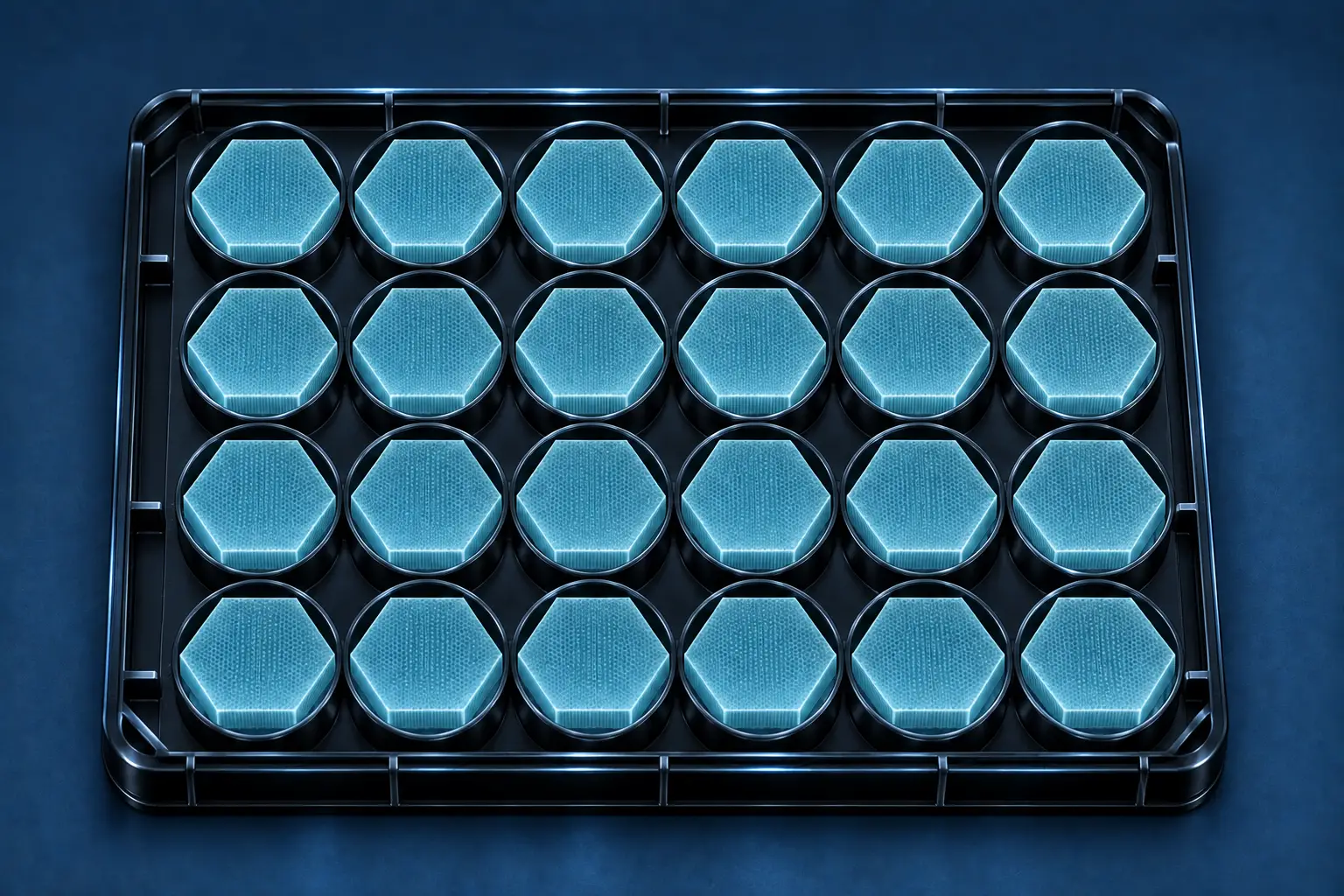
Bring your next research question into focus. Bio-Block plates give you a 24-well format with hexagonal Bio-Blocks for studying tissue explants and other selected models in situ. Explore the outcomes that matter to your study through histological stains, immunolabeling, or spatial omics. Choose your preferred delivery format: fully loaded plates or vials of four Bio-Blocks, with the same 10-plate minimum order.
Choose your supply format
Pricing by quote
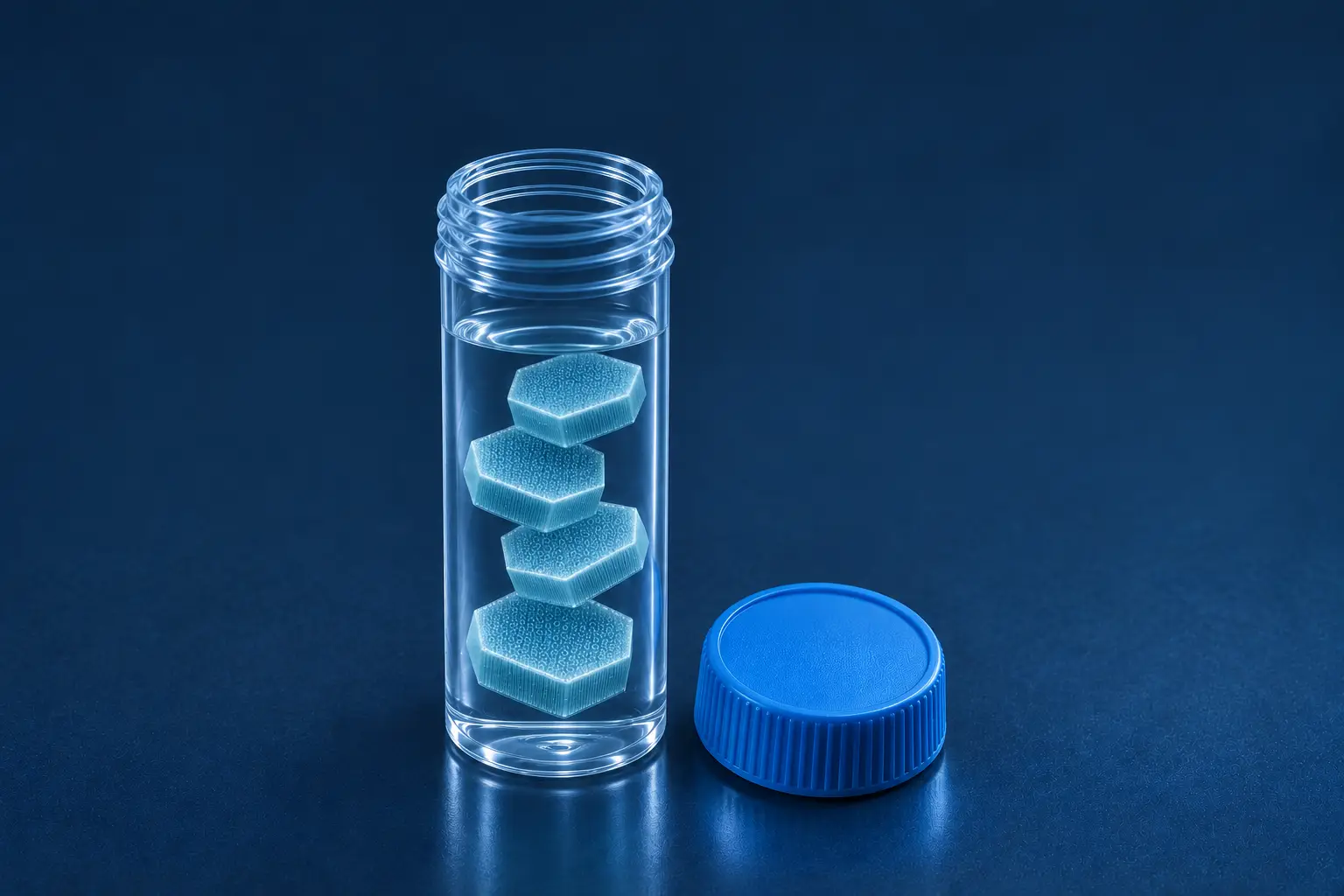
Minimum order: 240 Bio-Blocks, supplied as either 60 vials of 4 Bio-Blocks or 10 fully loaded 24-well plates.
Contact us for a quoteTell us your preferred format and quantity using our Contact Us page. Our team will review your inquiry and prepare a personalized quote. Once you accept the quote, Ronawk will send an invoice through QuickBooks with payment instructions.
Made to order. Allow up to 30 days.
Please allow up to 30 days after payment is confirmed for plate or vial orders to ship. Shipping transit time is additional.
For Research Use Only. Not for human or diagnostic use.
Applications
What do you want to discover in your tissue model?
Your research question deserves a readout chosen to answer it. Use Bio-Block plates to investigate tissue structure, marker distribution, or molecular patterns in situ, with preparation and analysis tailored to your model.
Histological stains
Look more closely at how your tissue is organized and how it responds. Choose histological stains that reveal the morphological and structural features relevant to your question.
Immunolabeling
Follow the markers that matter to your study. Use immunolabeling to explore cell identity, organization, and responses to your experimental conditions.
Spatial omics
Explore where molecular patterns occur within your model. Plan sample preparation around your chosen spatial omics method to investigate these patterns in context.
Featured application · Tissue explants
Explore the questions your tissue raises.
What changes after treatment? Where are the markers of interest? Build a tissue explant study around the observations you want to make, then use histological stains, immunolabeling, or spatial omics to examine the response in situ.
Choose the controls, time points, and readouts that will help you interpret what you observe.
Differentiation
Why Bio-Block plates?
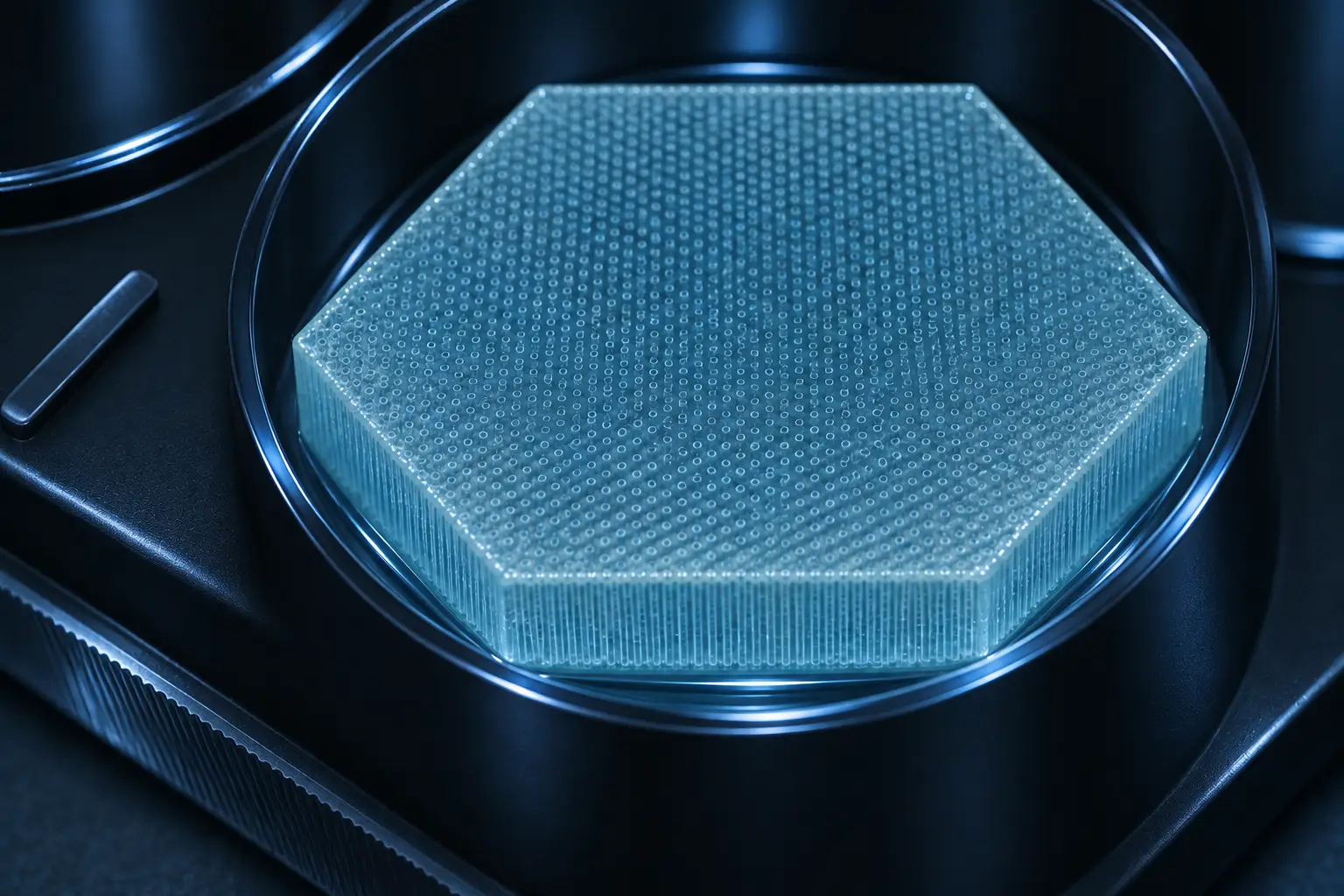
Choose a plate format that puts your research question at the center. Bio-Block plates bring the Bio-Blocks microchannel structure to a hexagonal format for focused, in-situ studies.
Familiar structure. Hexagonal format.
Work with the same Bio-Block microchannel structure in a different overall shape: hexagonal blocks in each well of a 24-well plate.
Plan your next study.
Choose the delivery format that fits your workflow: 10 fully loaded 24-well plates or 60 vials of 4 hexagonal Bio-Blocks to fill your own plates.
Keep your endpoint in view.
Start with what you want to learn. Select your culture conditions and sample preparation around the in-situ analysis that addresses your question.
Workflow
Give your next question a practical starting point.
You bring the biological question. Plan your model, conditions, and analysis, and follow the same handling and preparation guidance used for Bio-Blocks.
Define
Identify the biological question, experimental conditions, and outcomes you want to measure.
Prepare
Follow the standard Bio-Blocks handling, storage, and preparation guidance for both plate and vial formats.
Introduce
Aseptically seed cells, spheroids, organoids, or microtissues, including tissue biopsies, into the Bio-Blocks.
Culture
Maintain the selected culture conditions and apply the treatments and time points in your design.
Analyze
Prepare samples for histological stains, immunolabeling, or spatial omics to examine the chosen outcomes.
Technical documentation
Product resources
Take the next step with the details in hand. Handling and storage conditions are the same as for Bio-Blocks. Follow the Bio-Blocks guidance and protocols in the resource library.
Imaging & sample preparation
Find the Bio-Blocks Imaging Guide and fixation guidance in the current resource library.
Browse Bio-Blocks resources →Immunolabeling workflows
Review existing Bio-Block immunolabeling guidance and discuss its application to your plate study.
View protocols →Plan a plate-based study
Have a study in mind? Share your explant model and intended analysis so we can discuss a starting workflow and the requirements to address before you order.
Contact Ronawk →Related research
Explore published Bio-Blocks studies and application notes for context on cell models and analytical workflows. Each source describes its own product configuration and experimental conditions.
Explore Research & Progress →Frequently asked questions
How are Bio-Block plates different from individual Bio-Blocks?
Bio-Block plates contain hexagonal Bio-Blocks in a 24-well plate format. They are primarily used for in-situ analysis of specific outcomes, including tissue explant studies using histological stains, immunolabeling, or spatial omics.
Which plate formats are available?
Ready-filled Bio-Block plates are available only in the 24-well format and are custom made to order. The same 240 Bio-Blocks can be supplied in 60 vials of 4 for customers who want to fill their own plates. Follow standard Bio-Blocks handling guidance and confirm compatibility of customer-supplied plates with Ronawk.
Can I order hexagonal Bio-Blocks to fill my own plates?
Yes. Choose 60 vials containing 4 hexagonal Bio-Blocks each instead of 10 fully loaded plates. Use the same handling and storage guidance as Bio-Blocks. Contact Ronawk to confirm compatible plates for your study.
What is the minimum order?
The minimum order is 10 plates (240 Bio-Blocks), delivered as either 10 fully loaded plates or 60 vials containing 4 Bio-Blocks each.
When will my order ship?
Please allow up to 30 days after payment is confirmed for either plate or vial orders to ship. Shipping details are the same as for Bio-Blocks. Shipping transit time is additional.
How should I handle and store Bio-Block plates and vials?
Handling and storage conditions are the same as for Bio-Blocks. Cells, spheroids, organoids, or microtissues, including tissue biopsies, should be seeded aseptically into the Bio-Blocks. Follow the Bio-Blocks handling and preparation guidance.
How much do plates and vials cost?
Contact us with your preferred delivery format and quantity. Our team will review your inquiry and prepare a personalized quote. Once you accept the quote, Ronawk will send an invoice through QuickBooks with payment instructions. The minimum order is 10 fully loaded plates or 60 vials of 4 Bio-Blocks each.
Can I use Bio-Block plates to study tissue explants?
Yes. Tissue explant studies are a primary example of how Bio-Block plates can be used to investigate specific outcomes in situ. Select culture conditions and analysis methods appropriate for the tissue and question being studied.
How do I choose an analysis workflow?
Start with the outcome you want to measure, then select histological stains, immunolabeling, or a spatial omics method. Discuss sample preparation and method-specific requirements with Ronawk before beginning your experiment.
What are the intended-use restrictions?
For Research Use Only. Not for human or diagnostic use.
Ready to explore your next research question?
Tell us what you want to learn, which tissue model you plan to use, and whether you need ready-filled plates or vials of hexagonal Bio-Blocks. Let us know your preferred delivery format. Let’s discuss how Bio-Block plates could fit your next study.